

Educational institutions are complex systems, with both cultural and structural elements. To impart lasting change, institutions must adopt a holistic perspective to address these aspects systematically.
Minerva has developed a framework that describes seven dimensions of educational excellence.
When all seven dimensions function harmoniously, institutions consistently deliver excellent educational experiences that produce outstanding learner outcomes.
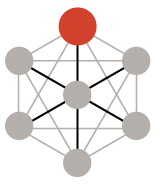
Every institution is established to serve a purpose. The best have aligned their missions and value with distinctive market positions: a clear reason for students to attend, for donors to give, and for society to care. Creating continuity between the promise your university makes to the world and the way it delivers on that promise is fundamental to achieving educational excellence.
Optimal State: Alignment of the institutional mission, values, and strategic vision with a relevant and differentiated market position; internal decision making and commitment of resources focused on achieving the mission; effective communication of the distinctive value proposition and promise.
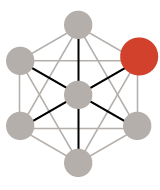
Like every organization, your university is only as good as its people, their training, and the resources devoted to supporting them. Developing deep institutional capacity in curriculum design, active instruction, and authentic assessment, as well as fostering a culture of ongoing innovation, will enable your teams to consistently provide exceptional learning experiences, even in the face of rapid change.
Optimal State: Appropriate allocation of human resources to all areas that touch the educational enterprise, from outreach and admissions to instructional and design faculty to student support; well-trained, competent personnel; ongoing investment in professional development.
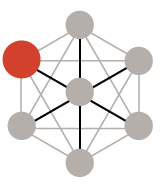
Integration is needed across the institution and beyond. Internal integration dissolves the boundaries between administrators, staff, and faculty, focusing all teams on student success, thereby ensuring holistic learning experiences, reducing the cost of support services, and eliminating superfluous amenities. Externally, institutions need to integrate with surrounding communities, organizations, and industry. By coordinating across the entire enrollment-to-career pathway, your institution can build an ecosystem that provides opportunities for students, faculty, businesspeople, and civic leaders, and expands their impact through network effects.
Optimal State: Internal: Functional and departmental unity and coordination; collaboration within and across teams; shared goals and processes focused on learning and student success. External: Seamless connection between the institution and communities, the workforce, and civil society.
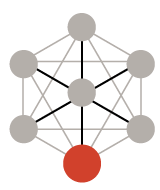
A coherent, competency-based curriculum and well-designed courses elevate the educational experience by enabling clearly structured student pathways and programs of study, while providing your institution with operational efficiencies. The basis for coherence is an articulated Skills Taxonomy, with specific, measurable learning outcomes interwoven throughout the curriculum, then foregrounded in every program, course, unit, and class session.
Optimal State: Coherent, skill-focused programs and credential pathways; an institution-wide Skills Taxonomy; scaffolded course sequences that foreground learning outcomes, using course material and assignments to reinforce and apply new frameworks, techniques, and behaviors; assignments that provide opportunities to transfer skills across contexts.
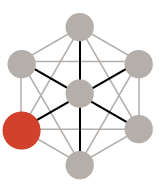
Educators who are empowered with evidence-based practices can improve student engagement and promote skill acquisition and application, while providing formative feedback and frequent assessment of specific learning outcomes. Embracing these methods demands a shift in your faculty’s mindset, moving from lecturing to facilitating, from content knowledge to skill application, and from subjective judgment to objective evaluation.
Optimal State: Utilization of evidence-based methodologies (instruction, feedback, and assessment); relevant engagement modalities and diverse learning experiences; deliberate course and session design (flipped, fully active, and applied).
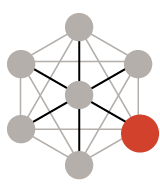
Whether in-person, online, or blended, the best educational experiences are enhanced by intentionally designed environments and technologies. Providing faculty, staff, and students with adaptive physical spaces and purpose-built digital platforms, as well as relevant tools and materials, helps ignite the learning process, inspiring exploration, discourse, introspection, and intellectual development. Classroom learning is also supported by the development of extracurricular and experiential opportunities that align with the institutional Skills Taxonomy.
Optimal State: Intentionally designed learning environments and technologies; accessible, student-centric spaces (physical and/or digital); universal tools and platforms; ongoing investment in maintenance, upgrades, and replacement; facilities that support relevant co-curricular and extracurricular activities and learning experiences.
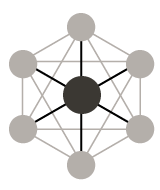
Data showing the application of specific learning outcomes provides evidence that students are acquiring the competencies that your institution promises they will. When collected consistently, managed effectively, and made visible to key stakeholders through the right learning platform, these data give assurance to faculty that their teaching is effective, to accreditors that your programs are working as intended, and to employers that your graduates have the skills they need to succeed and perform.
Optimal State: Consistent collection of data from authentic assessment, feedback, reflection, engagement, and performance, details about the application of specific learning outcomes across multiple contexts; access to insights derived from the data made available to various stakeholders to improve the performance of individual students, faculty, and staff; aggregate impact evaluation to inform ongoing institutional and programmatic innovation.

